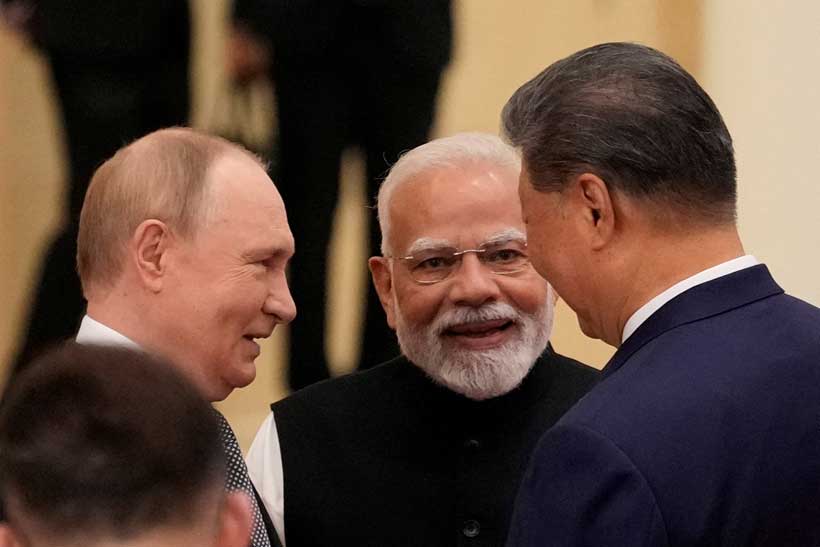

The world of politics in 2025 is marked by both familiar struggles and new dynamics that reflect the ever-changing global order. While the great powers continue to vie for influence, emerging nations are demanding more space at the table, and global institutions are grappling with how to stay relevant in a multipolar world.
- The Superpower Rivalry: United States vs China
- Europe at a Crossroads
- The Middle East: Balancing Change and Conflict
- Africa’s Rising Political Influence
- Asia’s Expanding Role
- Technology as a Political Battlefield
- Climate Change and Political Accountability
- International Institutions Under Pressure
- Domestic Politics and Global Repercussions
From the growing rivalry between the United States and China to Europe’s efforts at cohesion, from the Middle East’s geopolitical balancing acts to Africa’s rise as a hub of growth and innovation, the political landscape has become more interconnected, unpredictable, and consequential than ever before.
The Superpower Rivalry: United States vs China
The United States remains a dominant player but faces challenges to its global leadership. Domestic divisions, political polarization, and debates over America’s role abroad continue to shape its foreign policy. While Washington seeks to rebuild alliances and strengthen partnerships, particularly with NATO and Indo-Pacific allies, its influence is increasingly contested by China. Beijing, with its vast economy and Belt and Road projects, is positioning itself as an alternative center of global power. This competition has expanded into technology, trade, military influence, and space exploration, raising the stakes for global stability and international cooperation.
Europe at a Crossroads
Europe in 2025 faces a defining moment in its pursuit of unity and independence. The European Union is investing in defense, digital sovereignty, and green energy, but internal challenges remain — from post-Brexit complexities to disputes over migration and inflation. Europe is striving to find a balance between aligning with U.S. strategies and maintaining autonomy in world affairs. Its ability to preserve cohesion amid crises will determine whether it continues as a central global player or becomes fragmented under competing national interests.
The Middle East: Balancing Change and Conflict
The Middle East continues to balance between progress and instability. Normalization deals between Israel and several Arab states have opened doors for trade and cooperation, yet conflicts in Syria, Yemen, and Palestine persist. Iran’s nuclear ambitions remain a regional flashpoint, while Gulf nations like Saudi Arabia and the UAE are diversifying their economies and embracing technology and climate initiatives. These shifts signal an evolution beyond oil dependency, though rivalries and ideological divides still pose obstacles to lasting peace.
Africa’s Rising Political Influence
Africa’s political significance is growing as the continent experiences rapid economic and demographic expansion. Countries such as Nigeria, Kenya, and South Africa are becoming key players on global issues, including climate, trade, and technology. With its youthful population and resource-rich potential, Africa has drawn investment from both Western and Eastern powers. However, governance issues, corruption, and terrorism remain major challenges. The continent’s success in overcoming these barriers will define its role in the evolving world order.
Asia’s Expanding Role
Asia remains the focal point of 21st-century geopolitics. India, Japan, and South Korea are asserting greater influence in global governance, with India’s tech-driven economy serving as a counterbalance to China. Japan and South Korea continue strengthening ties with Washington while pushing for innovation and defense expansion. Southeast Asian nations, positioned between major powers, are leveraging diplomacy and trade to maintain balance and stability in a competitive region.
Technology as a Political Battlefield
Technology is no longer just a tool — it is a weapon of influence. Nations are competing to dominate artificial intelligence, quantum computing, and cybersecurity. The race to set global tech standards has fueled fears of digital authoritarianism and internet fragmentation. Countries are now realizing that control over digital infrastructure could determine their strategic power in the coming decades. Global efforts to regulate emerging technologies face deep divisions, reflecting ideological and economic rivalries.
Climate Change and Political Accountability
Climate change has emerged as a defining political issue. Governments are under increasing pressure to adopt green policies as global temperatures rise and natural disasters intensify. Developing nations demand financial and technological support to transition toward sustainability, while younger generations push leaders for climate justice. The politics of the environment now defines leadership credibility and drives policy debates in every major capital.
International Institutions Under Pressure
The credibility of institutions like the United Nations and World Trade Organization is being tested. Critics argue these organizations are outdated and slow to respond to modern crises, while emerging economies seek greater representation. Calls for reform highlight the shifting balance of power in global governance and the need to make these bodies more equitable and effective. The success of institutional reform could determine the survival of multilateralism in a fractured world.
Domestic Politics and Global Repercussions
Rising populism, nationalism, and authoritarian control continue to shape foreign policy decisions. Democracies are facing internal instability, while autocratic regimes use centralized control to maintain dominance. Social media activism and digital protest movements are challenging power structures and redefining civic participation. The fusion of domestic pressures with international responsibilities makes global diplomacy more complex and volatile.
FAQs
What is the main political rivalry in 2025?
The competition between the United States and China dominates global politics, with both nations competing for influence in technology, trade, and security.
How is Europe adapting to new global challenges?
Europe is striving for greater unity and strategic autonomy, focusing on defense, digital independence, and climate policies while managing internal divisions.
What role does Africa play in global politics?
Africa’s young population and growing economies make it an increasingly influential player, though governance and security challenges remain.
Why is technology central to politics today?
Control of emerging technologies such as AI and quantum computing has become a key measure of power, influencing everything from economic strength to national security.
How is climate change shaping politics?
Climate change has become a global political issue, driving nations to cooperate on sustainability while debating responsibility and fairness in climate action.
Conclusion
Global politics in 2025 reflects a world that is more interconnected, more contested, and more complex than at any point in recent history. The balance of power is shifting, with new voices rising alongside established players.
While rivalry and competition dominate headlines, cooperation remains essential to addressing shared challenges such as climate change, cybersecurity, and pandemics.
The political choices made today will not only shape national destinies but also the future of humanity as a whole.
In this dynamic era, the success of global politics depends on whether leaders can balance ambition with responsibility, competition with cooperation, and power with justice.